
Colly
Colly is a fast and elegant Go framework for building web scrapers, crawlers, and spiders with a clean, chainable API.
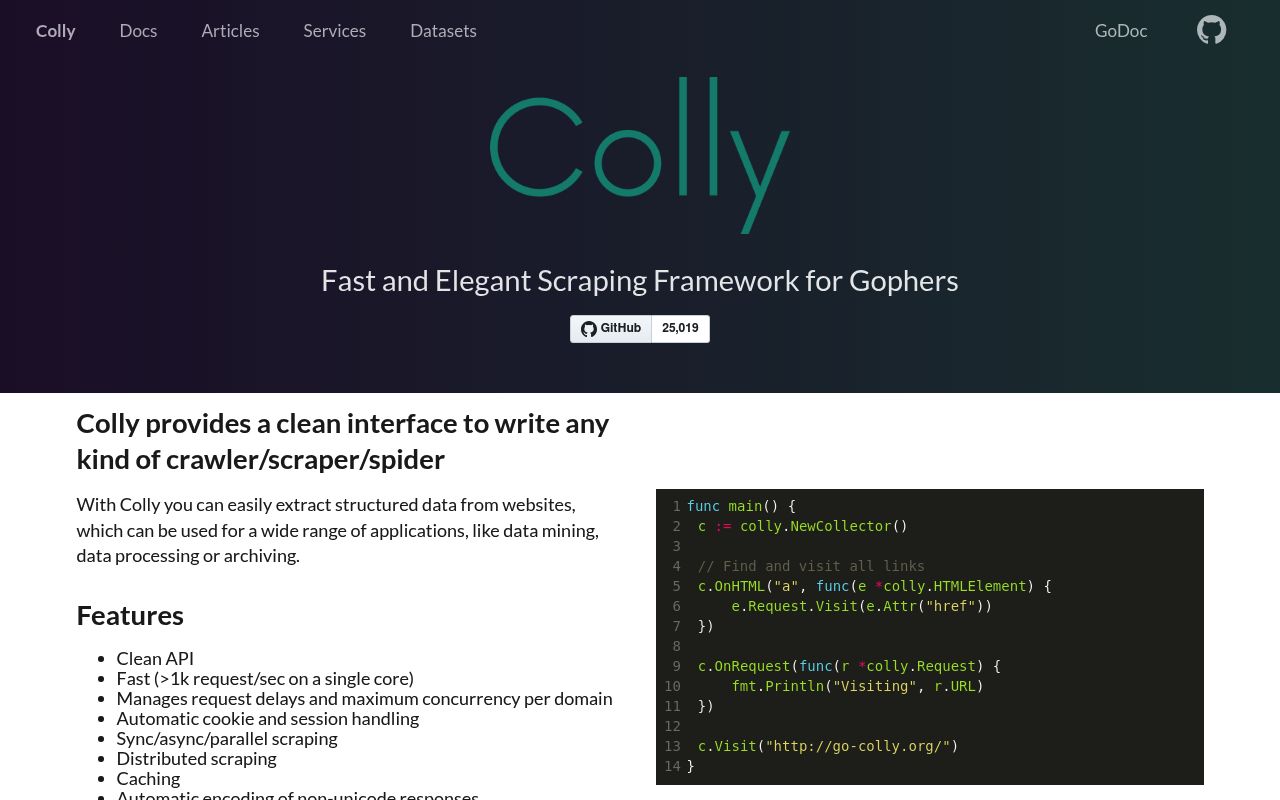
Colly is a fast, elegant scraping framework for Go that provides a clean interface for building any kind of crawler or spider.
Key Features:
- Speed - Leverages Go's concurrency model for blazing fast parallel scraping
- Clean API - Chainable, callback-based interface for intuitive crawler development
- Cookie Handling - Manages cookies and sessions across requests seamlessly
- Rate Limiting - Built-in request delays and parallelism controls to respect target sites
- Distributed Crawling - Supports distributed scraping with Redis backend
- Caching - Built-in response caching to reduce redundant requests during development
Whether you're a Go developer building data pipelines, an engineer scaling web crawlers, or a researcher collecting structured data, Colly provides a performant and idiomatic solution.
Growing a website? Track its keywords, Google rankings, Search Console insights, and share of voice with bisibility. Free during beta.
Our productSource code
gocolly/colly
Stars
25.6KForks
1.9KLast commit
2026-10-05License
Apache-2.0Language
Go
Metrics recorded 2026-10-16
Repository details
License source: Repository license file
Frequently asked questions
What is Colly for Go?
Colly is a Go library for building web scrapers and crawlers. Its Collector lets you register callbacks for requests and HTML elements, follow links and extract structured data from fetched pages.
Sources (checked ): Colly framework and example
Similar to Colly

Sources
Verified against the gocolly/colly repository and the go package.