
Typesense
Typesense is a fast, typo-tolerant search engine that delivers instant search-as-you-type results over your scraped and structured data.
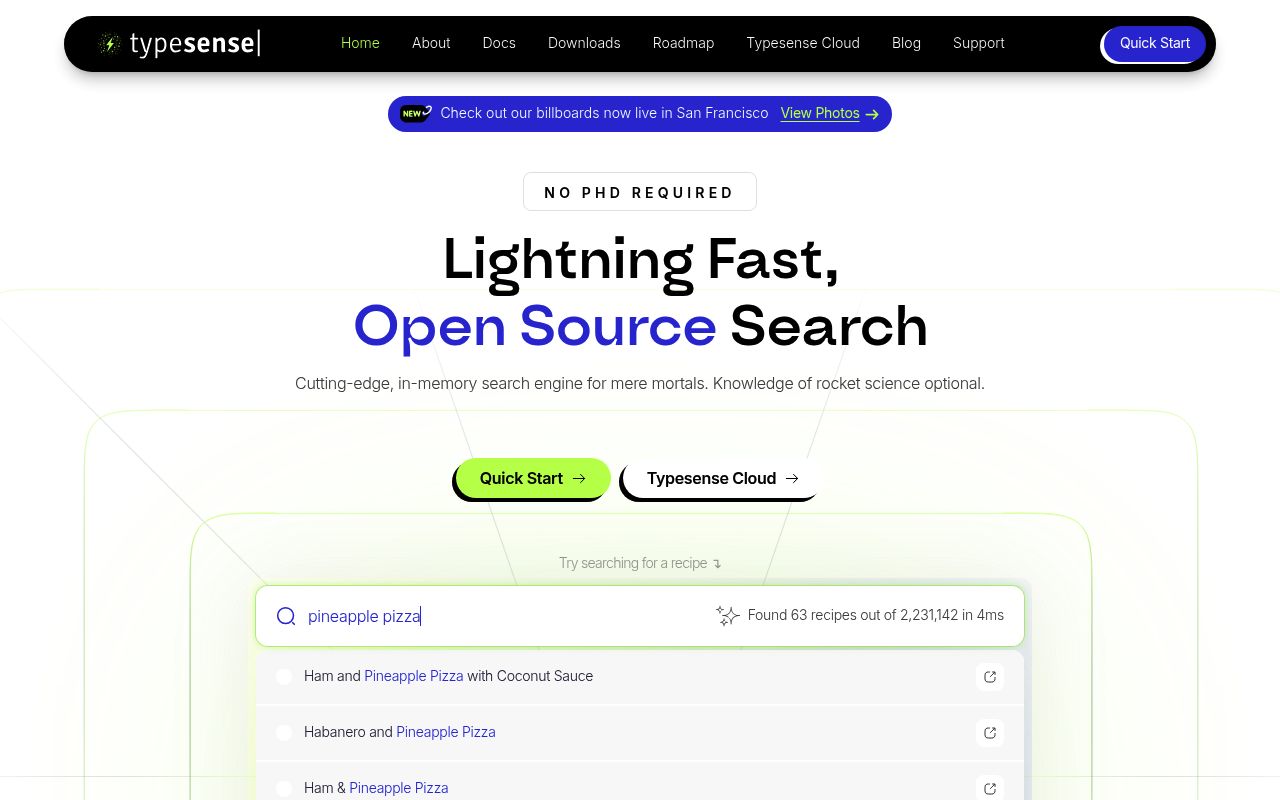
Typesense is a fast, open-source search engine optimized for instant search-as-you-type experiences.
Key Features:
- Typo Tolerance - Automatically handle misspellings and partial matches for forgiving search.
- Faceted Search - Filter and refine results with dynamic facets, ranges, and geo-search.
- Easy Setup - Get started in minutes with a single binary and intuitive REST API.
- High Availability - Replicate data across nodes for replicated search deployments.
Whether you're building product search for scraped catalogs, powering site search, or indexing extracted datasets, Typesense provides fast, relevant results without the operational complexity.
Web scraping workflow
How to use Typesense in a web scraping pipeline
Typesense provides search over data that you import into collections. For web scraping, it belongs after the crawler and parser, where cleaned records can become searchable by the application's users.
A practical workflow
- Use a separate HTTP or browser-based scraper to extract records with stable identifiers and source URLs.
- Define the collection's fields and import validated records, preserving the attributes needed for result display and filtering.
- Connect a search interface to the collection and link each result to the canonical record or source page.
When it fits
Use this when a collected catalog or documentation corpus needs its own search interface. Evaluate field choices and representative queries against the actual scraped text rather than assuming the same settings suit every source.
Boundaries
Typesense is not an independent web index or a SERP-scraping service. Your pipeline remains responsible for acquisition, extraction and synchronization. Keep authoritative content outside the search interface and plan how recrawls, missing pages and removed records affect the index before relying on it for current answers.
Growing a website? Track its keywords, Google rankings, Search Console insights, and share of voice with bisibility. Free during beta.
Our productRepository
typesense/typesense
Stars
26.9KForks
1KLast commit
2026-10-13License
GPL-3.0Language
C++
Metrics recorded 2026-10-16
Repository details
License source: Repository license file
Frequently asked questions
What is Typesense used for?
Typesense indexes documents for application and website search. It supports typo-tolerant queries, filtering and relevance controls through an API. The server can run on your own infrastructure or in Typesense Cloud.
Sources (checked ): Typesense guide; Typesense Cloud
Is Typesense free to use?
The Typesense server is open source under GPLv3. Self-hosting has no software subscription fee, but infrastructure and operations cost money. Typesense Cloud is a separately priced managed service.
Sources (checked ): Typesense GPLv3 license; Typesense Cloud
What are the alternatives to Typesense?
Meilisearch and Algolia also provide APIs for application search. Compare indexing, filtering, relevance controls and deployment choices using your own documents. Their schemas and query interfaces differ, so migration can require application changes.
Sources (checked ): Typesense guide; Meilisearch overview; Algolia documentation
What are the key differences between Algolia and Typesense?
Typesense offers a server you can self-host and a managed Cloud service. Algolia provides a managed search platform with its own indexing, relevance and client APIs. Compare hosting control, required search features and each service’s pricing dimensions.
Sources (checked ): Typesense guide; Typesense Cloud; Algolia documentation
Sources
Verified against the typesense/typesense repository and the npm package.